Henrico Small Business Spotlight: Wild Harmony Landscapes
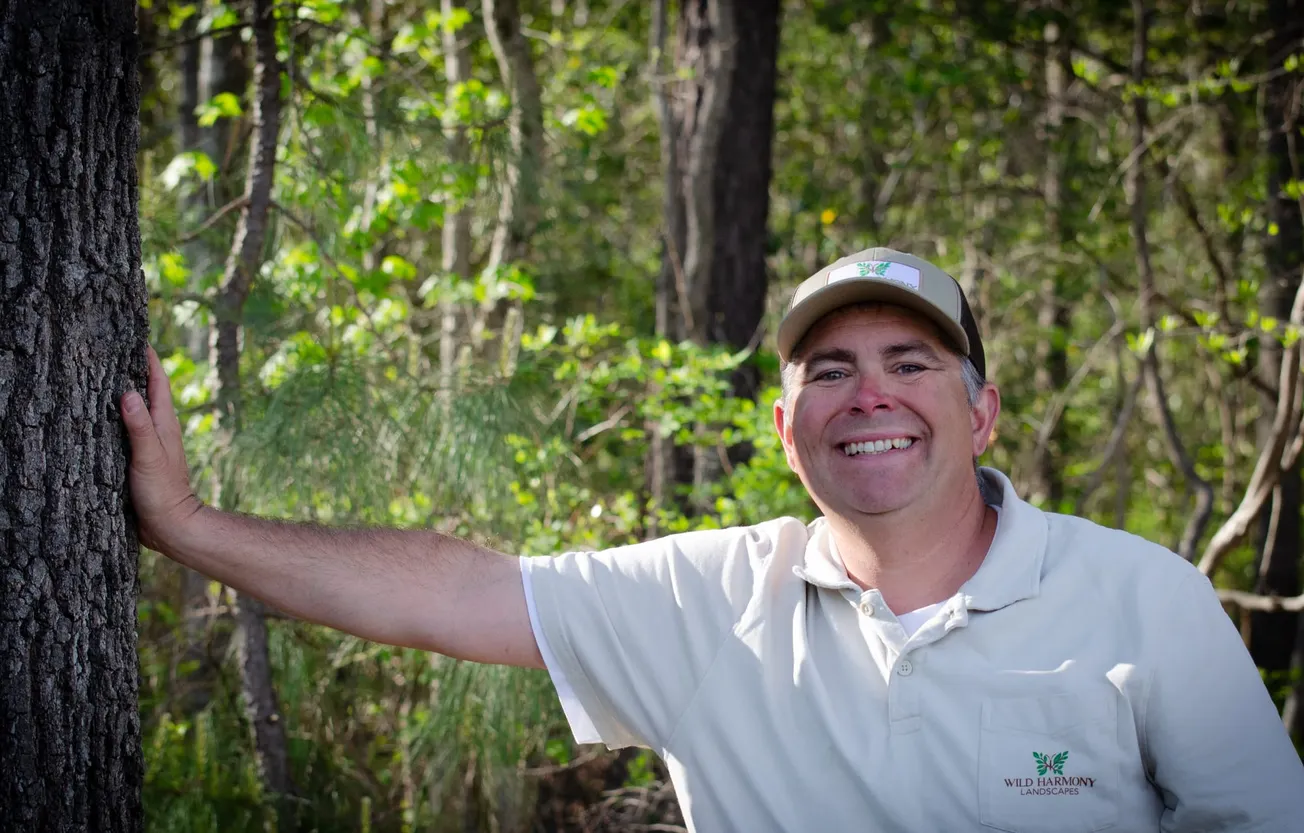
Andy Wessel is in the business of changing minds. With Wild Harmony Landscapes as his vessel, he is hoping to bridge the gap between landscaping and environmental responsibility.
Wessel was landscaping on and off for decades before starting his own company. But working for traditional landscaping businesses was what finally brought Wild Harmony Landscapes to fruition about a year ago.
“I just kind of saw how much fertilizer was getting put down, how much water was getting used, and how wasteful and destructive the conventional landscaping industry and that conventional mindset can be to the earth,” Wessel said. “[Chemicals] would just run off and run down into the drain or right down into the Chickahominy River and that just kind of made me sad, and I decided I didn't really want to be a part of that anymore.”
Inspired by the convictions of renowned conservationist Aldo Leopold, Wessel named his company Wild Harmony Landscapes to promote the idea that conservation requires engagement with our ecosystems, rather than just protection of them. “Conservation is a state of harmony between people and land,” Wessel shared as one of his favorite Leopold quotes.
The tagline of Wild Harmony Landscapes is simple: “Conservation landscaping for diverse ecosystems.” But to understand what that actually looks like, it’s important to know what a diverse ecosystem is, in the first place.
“Diverse ecosystems means multiple native species that each play a different role in the overall community of the environment, or the overall community of the ecosystem,” Wessel said. “If you put it into human community terms, it's kind of the idea of the butcher, the baker and the candlestick maker … We need all these different things.”
Wessel tries to support diversity by planting native plants and reducing the size of lawns – areas of turf grass made of all one species, otherwise known as a monoculture.
“[Lawns] use too much water and fertilizer, the roots don't go deep into the soil to aerate it. . . There's far too much input than output,” Wessel said. “There's extensive research suggesting that nature wants diversity, it plays off diversity, and if we let diversity thrive in our lawns and our turf grass, then each plant has a specific role in nature to help the soil and whatnot.”
A 'collaborative' approach
As far as his services are concerned, the certified Chesapeake Bay Landscape Professional focuses on native garden design and installation, garden maintenance, lawn care using all-electric equipment and lawn overseeding and compost topdressing. But if you have questions about specifics, don’t hesitate to ask Wessel.
He wants to serve as a sounding board for people interested in conservation landscaping, and that could mean decreasing your lawn size by adding diverse plant species or creating new landscaping features that support the ecosystem rather than harm it.
What Wessel doesn’t want is people feeling deterred by his mission because they don't know exactly what they are looking for or can’t commit to landscaping that prioritizes conservation to the fullest extent. The biggest thing he looks for in potential clients? People who are open to the conversation.
“The tone I want to project as a business is collaborative,” Wessel said. “I'm looking for clients who are interested in this, who are open to this mindset, not people who just want somebody to come in and put dyed mulch down on your plants. . . We want to be more than that.”
In addition to working with private homeowners, Wessel frequently does work with businesses and nonprofits. The James River Association, in particular, has been an organization he’s consistently involved with through their River Hero Homes, Green Infrastructure Stewards and Riparian Stewards programs. He also maintains the grounds at the nonprofit’s James A Buzzard River Education Center.
In addition, Wessel is proud to be involved with the Upper & Middle James Riparian Consortium and Richmond Tree Stewards – both of which are organizations that strive to support our local ecosystems through education and action.
Wessel wants his business to be sustainable, of course, but making money has never been the ultimate priority. His overall goal is to change people’s mindsets about what suburban landscaping can look like when we remember our roles in the ecosystem as a whole.
“Somewhere in time, we as in humans got the idea that we own the land and we're not in charge of taking care of it anymore and we can do and plant whatever we want,” Wessel said. “And we forgot, I guess in our hubris, that we are part of the Earth, we need to take care of it and learn about it.”
Check out the Wild Harmony Landscapes Facebook page, or reach out to Wessel at wildharmonylandscapesllc@gmail.com if you’d like to learn more about Wessel and his company.
Nominate a Henrico small business to be featured in the Henrico Small Business Spotlight by e-mailing us here.